Due Diligence in the AI Age

They will never stop printing money.
At the same time, AI is turning expertise into a commodity. The convergence of these two truths has many implications, but ultimately it means this: capital without competence is dead weight.
That is the uncomfortable truth of investing in the AI era.
Everybody wants exposure to artificial intelligence. Everybody wants the upside. Everybody wants the portfolio screenshot that proves they were early. But most investors are not underwriting technology. They are underwriting theater. They read polished decks. They nod at demo videos. They repeat phrases they half understand: agents, inference, ontology, orchestration, proprietary data, vertical AI, model moat. They confuse vocabulary with judgment.
The market will punish that laziness. It always does.
AI does not reward passive spectators. It rewards people who can tell the difference between a real system and a clever wrapper, between a durable infrastructure company and a weekend prototype, between a founder who has lived the pain and a founder who learned the market from a podcast.
The investor who cannot build is blind and losing their other senses at an accelerating rate.
That does not mean every great investor needs to be a world-class engineer. It means capital must be paired with technical taste. You need enough building competence to understand what is hard, what is fragile, what is fake, and what compounds.
In the old market, you could sometimes hide behind access. In the AI market, access is not enough.
Code is the new due diligence.
A pitch deck can lie. A GitHub repository is harder to fake. A product demo can be staged along a “happy path”. However, a system architecture reveals the truth. A founder can talk about scale. Their infrastructure bill, latency profile, data pipeline, eval framework, and deployment process will tell you whether the business can actually survive contact with reality.
I had a guy tell me he had 12K users for a niche product I wasn’t sure 50K users existed for worldwide… so I asked him for the AWS bill or some other evidence of infra supporting that user load. He disappeared. My money didn’t.
This is why the best technology investors are usually builders, former builders, or obsessive students of the craft.
They can feel friction. They’ve been optimizing around it and fighting it their entire life.
They know when a product is fighting its own architecture. They know when a team is shipping around a broken core. They know when the model is impressive but the workflow is useless. They know when the margins will disappear under inference costs. They know when the demo works only because a human is hiding behind the curtain.
That kind of judgment does not come from a spreadsheet alone.
It comes from building in real life.
When you have shipped software, you understand that every elegant product sits on top of a thousand brutal tradeoffs. You understand why latency matters. You understand why data quality beats presentation. You understand why developer experience can become a moat, while user experience is all that matters.
You understand why security is not a feature but a survival condition.
Most investors see the surface.
Builders see the machinery.
That is the edge.
The AI market is drowning in noise. Every week produces a new miracle demo. Every month produces a new category name. Every quarter produces a new consensus trade. Consensus is comfortable, and comfort is expensive.
Alpha begins where consensus stops.
My thesis is simple: stop chasing every AI application and study the bottlenecks.
Technical Execution
Lived Insight
Learning Velocity
Let’s dive in.
Applications are exciting. They are also fragile. A new model release can erase an entire feature set overnight. A platform change can compress a margin. A better interface can turn yesterday’s startup into today’s abandoned tab.
Infrastructure is different.
Infrastructure sits underneath the chaos. It becomes the toll road. Compute, data, deployment, security, observability, orchestration, developer tools, evaluation systems, and energy all become more important as AI usage expands.
The market loves to argue about which model wins.
I care more about what every model needs.
Every model needs compute. Every serious AI company needs clean data pipelines. Every enterprise deployment needs security and governance. Every developer team needs tools to evaluate outputs, monitor performance, control cost, and ship reliable products. Every agentic workflow needs orchestration. Every scaling system needs power.
Own the bottleneck and you own the rent stream.
This is the picks-and-shovels lesson, but with a sharper technological edge. The gold rush is not one market. It is a stack. Value accrues to the layers that become unavoidable.
That is why I want to understand GPU supply, inference economics, data rights, vector infrastructure, workflow automation, model observability, eval tooling, latency constraints, and deployment security. These are not buzzwords. They are pressure points.
When a pressure point becomes universal, it becomes a market.
The job of the investor is not to predict every winner. The job is to position capital where the future has to pass through.
This is where builder-investors have a structural advantage.
They ask better questions.
Not: Is this AI?
Everyone is AI now.
The better questions are:
What painful workflow does this replace?
Why is now the first moment this can exist?
What does the system know that competitors cannot easily access?
Where does cost scale as usage grows?
What breaks when ten customers become ten thousand?
Can the founder explain the architecture without hiding behind abstraction?
Does the product get better with usage, or just more expensive?
Is this a company, a feature, or a prompt with a landing page?
That last question will save you a lot of money.
The next filter is founder-market fit.
In early-stage technology, the founder is the system before the system exists. Their taste, judgment, speed, scars, and calibration are the first architecture of the company.
I do not want founders who discovered a market.
I want founders who escaped from the problem.
The best founders have lived inside the broken workflow. They felt the pain in their own hearts. They know the legacy system, the buyer psychology, the technical constraints, the political resistance, and the dirty details nobody puts in the market map.
That lived experience matters because startups do not fail politely. I can say that from first-hand experience.
They fail through ambiguity. They fail through false signals. They fail when customers say they love the product but will not pay. They fail when the technical architecture cannot support the promised workflow. They fail when a founder confuses attention with demand.
A founder with real domain scar tissue makes better decisions under pressure.
They know which customer complaints matter. They know which features are traps. They know when to pivot and when to hold the line. They know the difference between a nice demo and an urgent product.
That is founder-market fit.
It is not a vibe. It is operating leverage.
When I evaluate a company, I want three things before the conversation gets serious.
First: technical execution. Can this team actually build what it claims?
Second: lived insight. Does the founder understand the problem from the inside?
Third: cognitive calibration. Does the founder update quickly without becoming erratic?
If those are missing, the idea does not matter.
Ideas are cheap in the AI era. Execution is expensive. Distribution is brutal. Trust is scarce. Defensibility must be earned.
The final discipline is portfolio construction.
Technology investing is governed by the power law. Most outcomes will disappoint. Many will go to zero. A small number will return the fund, the portfolio, or the decade.
This is not permission to be reckless. It is the opposite.
The power law requires discipline.
You need enough shots on goal to encounter the outlier. You need enough concentration for the outlier to matter. You need enough humility to accept losses without turning every failed deal into an identity crisis. You need enough conviction to hold winners long after your nervous system begs you to take the easy gain.
The hardest part of compounding is not finding winners.
It is not selling them too early.
When a position doubles, the body wants relief. It wants proof. It wants the clean emotional reward of locking in the gain. But the whole point of asymmetry is that your best outcomes are supposed to feel uncomfortable.
They are supposed to stretch beyond normal expectations.
How can you have a 50x if you sell 100% of your position at 5x?
You do not build a power-law portfolio by cutting your best engines the first time they start to accelerate.
You size the risk. You accept that many bets will fail. You protect the downside structurally. Then you let the rare companies with true momentum compound.
That is the craft.
Build enough technical competence to see the machinery.
Invest where the bottlenecks are forming.
Back founders with lived pain and execution speed.
Size the portfolio for the power law.
Hold the winners until comfort starts lying to you.
The AI era will create absurd wealth, but it will not distribute that wealth evenly to everyone who buys a narrative. The returns will flow to owners of durable systems, unavoidable infrastructure, and companies built by people who understand the work at the level of code, customer, and constraint.
If you want to invest in it, learn how it is built.
This is not a game for the tired. This is not a game for those seeking a traditional and easy path. It’s a game of extreme ownership, deep technical competence, and unyielding psychological leverage.
You need to be building daily so you deepen your technical understanding and create leverage for yourself as an investor, learner, operator and teammate.
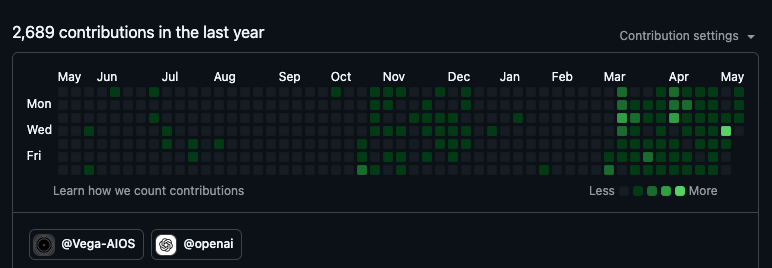
P.s. this is me building a bigger and better Wealth System for McDonagh Family Office:
👋 Thank you for reading Wealth Systems. I started Wealth Systems in 2023 to share the systems, technology, and mindsets that I encountered on Wall Street. I am a Wall St banker became ₿itcoin nerd, ML engineer & family office investor.
I want to learn what topics interest you, so connect with me on X.
…or you can find me on LNKD, if that’s your deal.
💡The BIG IDEA is share practical knowledge so we can each build and optimize our own wealth engines and combine them into a wealth system.
To help continue our growth please Like, Comment and Share this.
Disclaimer: For Informational Purposes Only
The content provided on this blog is for informational and educational purposes only and does not constitute financial, accounting, or legal advice. The author is not a licensed financial advisor, broker/dealer, or regulated by any financial authority.
No Warranties: All information is provided “as is” without any representations or warranties, express or implied. While every effort is taken to ensure the accuracy of the information, the author and blog owner cannot guarantee that the information is accurate, complete, or current. The author is not liable for any errors, omissions, or delays in this information or any losses, injuries, or damages arising from its display or use.
Investment Risks: Any investments, trades, or financial decisions made based on information found on this site are done at your own risk. Past performance is not indicative of future results. Investing involves a high level of risk, and you should perform your own due diligence before making any investment decisions.
Consult a Professional: Please consult with a certified financial advisor, accountant, or legal professional before making any financial decisions. By using this website, you agree to hold the author and blog owner harmless from any liability resulting from your use of this information.
Affiliate Disclosure: Some links on this website are affiliate links. This means if you click on the link and purchase the item or sign up for a service, I may receive a small commission at no extra cost to you. I only recommend products or services I personally use or believe will add value to my readers.