
Wall Street Is the Risk Layer Elon Just Routed Around

Everyone is covering the SpaceX IPO like a market story. The first-day pop. The $2.1 trillion close. The trillionaire list. The optics of rockets, satellites, AI, retail traders, passive funds, index committees, and Wall Street banks all colliding in one ticker: SPCX 0.00%↑
That is the surface.
The real story is allocation architecture and deep strategy.
SpaceX raised $75 billion in the largest IPO in history, broke Saudi Aramco’s 2019 record, opened at $150, closed around $160.95, and finished its first trading day up 19%, putting the company above $2 trillion in market value. Reuters also reported that SpaceX had drawn more than $250 billion of investor demand for a $75 billion deal. That leaves roughly $175 billion of demand unfilled. The market is staring at the pop. The strategic mind sees the refusal.
SpaceX did not need to optimize for maximum institutional satisfaction.
It optimized for ownership architecture.
The most important number in the entire transaction is not the closing price. It is not the valuation. It is not Elon Musk’s paper net worth. It is the retail allocation. Fidelity described normal IPO retail access as 5% to 10% of an offering, then noted SpaceX had decided to reserve up to 30% for retail investors. Reuters reported that retail ultimately received about 20% of the allocation, still far beyond typical IPO structure and enough to rewrite the distribution pattern of the largest public-market debut ever.
That is not generosity.
That is defense.
Wall Street thinks about IPO allocation as fee politics, relationship management, and bookrunner theater. Give the best clients the best shares. Reward the largest accounts. Keep the long-only institutions happy. Manage hedge fund demand. Create scarcity. Manufacture the pop. Then let the aftermarket digest the float through the usual machinery of upgrades, index inclusion, borrow markets, quarterly pressure, and valuation debates.
SpaceX broke that pattern because SpaceX is not selling a normal equity story. It is selling a civilizational operating system. Launch capacity, Starlink connectivity, AI infrastructure, orbital compute, Mars optionality, defense relevance, global broadband, direct-to-device communications, and a founder mythology that no bank can manufacture. The shareholder base had to match the asset.
Institutions buy models.
Retail buys missions. Look at GME 0.00%↑ and other recent crusades.
That distinction is the trade.
A hedge fund sees 112 times revenue, unprofitability, float scarcity, and volatility. A retail holder sees reusable rockets, Starship, Starlink, Mars, AI, sovereignty, broadband for the disconnected, and a ticker that finally lets ordinary investors own the company they watched bend physics for two decades. Reuters captured both sides of this perfectly, noting SpaceX’s $18.7 billion in revenue and a price-to-revenue ratio around 112, while also documenting retail investors buying aggressively and ranking SpaceX as the most purchased single stock among retail traders on day one.
That is not just demand.
That is identity.
A normal IPO creates liquidity. This IPO created a constituency.
Millions of investors now have a direct psychological and financial stake in the company’s mission. That matters because public companies are not merely valued by cash flows. They are valued by narrative durability, holder behavior, index gravity, political salience, media surface area, and the willingness of owners to absorb volatility without abandoning the asset.
The retail base gives SpaceX something institutions cannot provide.
Time.
Wall Street hates time unless time is packaged into discounted cash flow cells. Retail loves time when the mission is legible. The retail shareholder does not need next quarter’s guidance to understand why cheap launch matters. The retail shareholder does not need a sell-side note to understand why global satellite internet matters. The retail shareholder does not need permission from an allocation committee to believe that space, AI, energy, robotics, defense, and communications are converging into one platform.
This is the anti-fragile fortress.
Retail ownership does not eliminate volatility. It metabolizes volatility differently. Institutions rebalance. Hedge funds short. Index funds mechanically absorb. Retail communities narrate, defend, accumulate, meme, evangelize, and hold through drawdowns when they believe the underlying story is bigger than the tape. Tesla proved the structure. SpaceX just industrialized it at IPO scale.
The old IPO playbook was scarcity for institutions.
The new playbook is loyalty as capital structure.
This is why the $175 billion of unfilled demand matters. SpaceX could have appeased more institutional capital. It could have squeezed retail down into the token allocation that public investors usually receive after the banks finish feeding their best accounts. It could have played the safest Wall Street game and still delivered a historic deal. Instead, it created a shareholder base that looks less like a cap table and more like a movement.
The offering documents reinforce the strategic frame. SpaceX applied to list Class A common stock on Nasdaq and Nasdaq Texas under ticker SPCX, and the prospectus stated that net proceeds would fund growth strategy across AI compute infrastructure, launch infrastructure, launch vehicles, satellite constellation capacity, and general corporate purposes. That is the financial language. The actual operating translation is clear: build the rails for the next technology stack on Earth and above Earth.
This was never just about rockets.
SpaceX is now a layered infrastructure company. Space is the transport layer. Starlink is the communications layer. AI is the cognition layer. Orbital data centers are the compute layer. Launch reuse is the cost curve. Starship is the scale unlock. The public listing gives that machine a liquid equity wrapper, then hands a meaningful portion of the wrapper to the people most likely to understand the mission in emotional, technological, and civilizational terms.
That is moat architecture in its purest form.
A moat is not only patents, contracts, cost curves, or network effects. A moat is anything that increases the difficulty of attack. SpaceX already had physical moats in reusable launch. It had operational moats in launch cadence. It had regulatory and national-security moats in defense relevance. It had network moats in Starlink. The IPO added a capital markets moat: a shareholder base structurally harder to shake out than a purely institutional float.
The bear case is obvious and incomplete. The valuation is extreme. The company is not conventionally profitable. Execution risk is enormous. AI infrastructure burns capital. Starship still has to scale into the promise embedded in the price. Public-market scrutiny will create pressure that private-market mythology could ignore. Reuters noted analyst caution around valuation and volatility, and those concerns are real.
They are also not the main event.
The main event is that SpaceX has changed the relationship between public markets and frontier technology. For decades, ordinary investors watched the greatest private companies compound behind closed doors while venture funds, sovereign wealth, crossover funds, and elite institutions captured the private-market wealth creation. SpaceX cracked that wall at the largest scale possible. It did not just let retail into the building.
It gave retail a structurally meaningful seat before the index machine, before the next passive wave, before the next generation of capital allocators is forced to own the name.
This is how capital markets become distribution.
This is how distribution becomes defense.
This is how defense becomes destiny.
The IPO also forces every late-stage private technology company to answer a new question. Not “how much can we raise?” Not “what price can we command?” Not “which institutions need allocation?” The real question is now sharper: what shareholder base maximizes the company’s long-term mission?
SpaceX answered with brutal clarity.
The company chose believers over allocators.
It chose a shareholder structure that turns retail enthusiasm from aftermarket noise into first-order strategic design. That is why the IPO will be studied by bankers, founders, regulators, exchanges, index committees, hedge funds, and every private AI company waiting behind it.
The pop was the headline.
The allocation was the weapon.
The trillion-eight IPO valuation, the $2.1 trillion close, the world’s-first-trillionaire optics, the trading frenzy, and the retail chase all matter because they make the story visible. But the deeper move is quieter and more important. SpaceX built a public-market base that can absorb attacks, amplify mission, and convert belief into holding power. It made the cap table part of the product.
That is the play.
SpaceX did not just go public.
It turned public ownership into infrastructure.
Elon Beats The Street
Wall Street does not like Elon.
Wall Street likes predictable CEOs, managed language, quarterly discipline, committee-approved messaging, low-volatility governance, and founders who learn to behave once the company joins the index complex. Elon is the opposite of that.
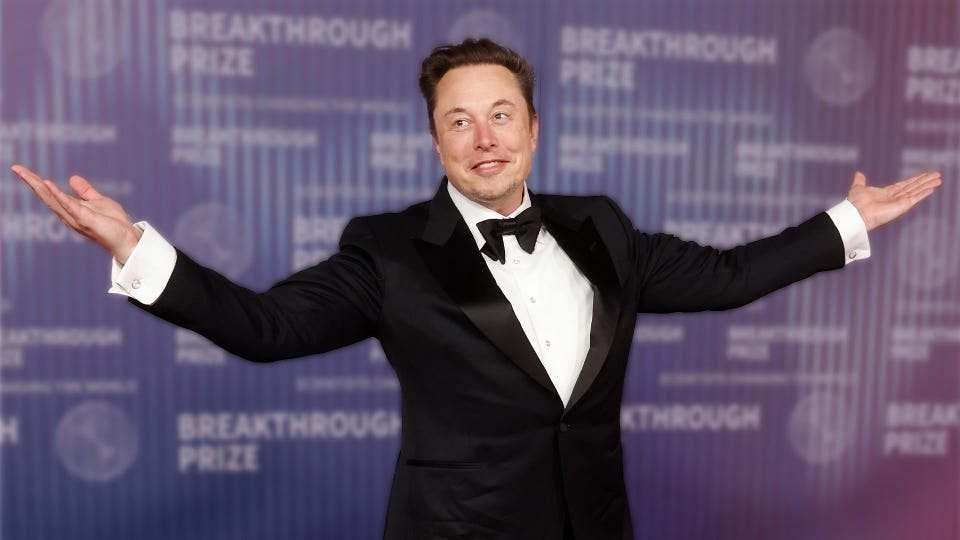
Elon is a chimera of volatility and product-market fit. He is key-person risk and key-person alpha in the same body. He breaks the spreadsheet, then makes the spreadsheet bigger than anyone thought possible.
That is why the retail allocation matters so much. Professional capital has always struggled to price Elon because the standard institutional model treats his behavior as a discount. The political fights, the regulator fights, the short-seller wars, the media wars, the compensation fights, the governance fights, all of it becomes risk language. Reuters documented the pattern at Tesla when shares fell nearly 8% after Musk’s America Party announcement reignited investor concerns about his focus, and again when some major investors and proxy firms opposed his record Tesla pay package on governance and dilution grounds.
That is Wall Street’s frame.
The people have a different frame.
The people do not see Elon as a neat governance variable.
We see the guy who made electric cars inevitable, landed rockets vertically, built satellite internet at planetary scale, forced legacy industries to move, and turned impossible timelines into operating pressure. We do not need him to sound like a Morgan Stanley conference speaker. We need him to keep shipping. We need the mission to keep compounding.
We need the future to keep arriving faster and faster.
This is why the SpaceX IPO is not just a financing event. It is a defensive maneuver against institutional friction. Elon knows the attacks that come once a company becomes public. The activist letters. The governance campaigns. The ESG bullshit. The index mechanics. The short reports. The cable-news panic cycles. The valuation lectures from people who missed Tesla, missed reusable rockets, missed Starlink, and will now explain why Mars does not fit their terminal value model.
So he put more of the float into the hands of people who understand the assignment.
Retail demand proved the point immediately. Reuters reported that Japanese investors alone sought more than $6.2 billion of SpaceX shares, with most of that demand coming from retail investors, while the broader IPO drew $250 billion of global demand. MarketWatch reported that SpaceX became the most purchased single stock among retail investors on its first trading day.
That is not noise.
That is armor.
A retail-heavy shareholder base gives SpaceX a different kind of defense. It gives the company a crowd that can absorb volatility, narrate the mission, resist the institutional consensus, and hold through attacks that would shake a normal IPO. Wall Street trades the controversy. Retail owns the trajectory. Wall Street sees governance risk. Retail sees founder velocity. Wall Street sees a trillion-dollar valuation problem. Retail sees the only company on Earth with a credible shot at building the next physical layer of civilization.
That is the genius of the move.
Elon did not avoid Wall Street. He used Wall Street’s own machine to weaken Wall Street’s control over the story. He took the largest IPO in history, created a public currency, harvested institutional demand, and still made sure the company’s ownership base included the people most likely to defend the mission when the professional class turns hostile.
The street may not like him.
The people do.
And in a public market built on attention, conviction, liquidity, and narrative durability, that difference is not cosmetic. It is structural.
👋 Thank you for reading Wealth Systems. I started Wealth Systems in 2023 to share the systems, technology, and mindsets that I encountered on Wall Street. I am a Wall St banker became ₿itcoin nerd, data engineer, agentic engineer & family office investor.
…or you can find me on LNKD.
💡The BIG IDEA is share practical knowledge so we can each build and optimize our own wealth engines and combine them into a wealth system.
To help continue our growth please Like, Comment and Share this.
Disclaimer: For Informational Purposes Only
The content provided on this blog is for informational and educational purposes only and does not constitute financial, accounting, or legal advice. The author is not a licensed financial advisor, broker/dealer, or regulated by any financial authority.
No Warranties: All information is provided “as is” without any representations or warranties, express or implied. While every effort is taken to ensure the accuracy of the information, the author and blog owner cannot guarantee that the information is accurate, complete, or current. The author is not liable for any errors, omissions, or delays in this information or any losses, injuries, or damages arising from its display or use.
Investment Risks: Any investments, trades, or financial decisions made based on information found on this site are done at your own risk. Past performance is not indicative of future results. Investing involves a high level of risk, and you should perform your own due diligence before making any investment decisions.
Consult a Professional: Please consult with a certified financial advisor, accountant, or legal professional before making any financial decisions. By using this website, you agree to hold the author and blog owner harmless from any liability resulting from your use of this information.
Affiliate Disclosure: Some links on this website are affiliate links. This means if you click on the link and purchase the item or sign up for a service, I may receive a small commission at no extra cost to you. I only recommend products or services I personally use or believe will add value to my readers.